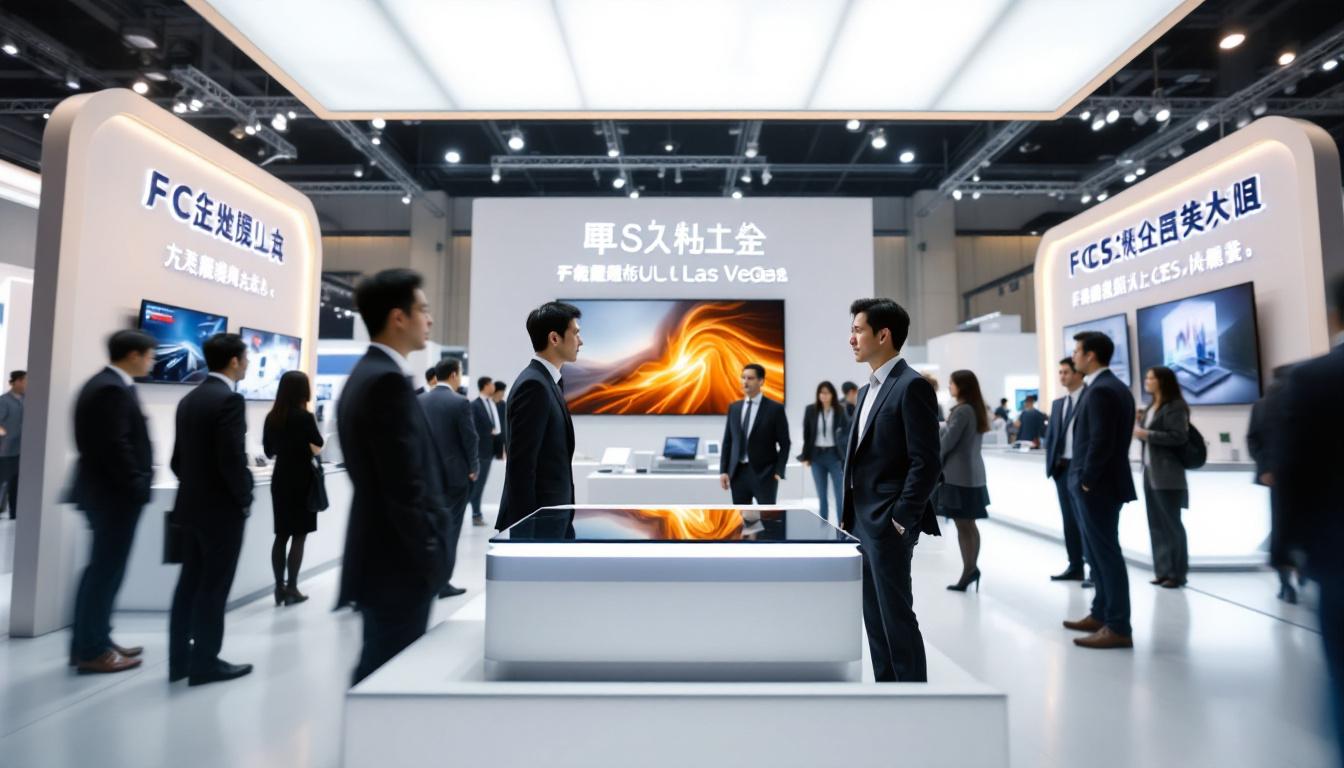
How Many Interpreters Do I Need for a Trade-Show Booth?
For a full exhibition day, plan on two Japanese interpreters rotating roughly every 30 minutes. Interpreting is cognitively demanding, and accuracy drops sharply when one person works a busy booth for eight straight hours without relief. For short meetings or half-days, a single interpreter is usually enough. Budget from about $1,500 per interpreter per day in Las Vegas, with full-show packages from around $7,500.
Why can't one interpreter cover a full day?
Interpreting requires intense, continuous concentration — listening, comprehending, converting, and speaking all at once or in rapid alternation. Fatigue sets in within an hour of sustained work, and errors and omissions climb with it. The industry norm for demanding settings is two interpreters who rotate about every 30 minutes, so each rests while the other works. This keeps quality consistent across an entire show day. One exhausted interpreter at hour seven is a real risk to your most important conversations.
When is one interpreter enough?
A single interpreter works well for:
For these, rotation is unnecessary and one qualified interpreter delivers excellent results.
How does this scale across a multi-day show?
For a multi-day event like CES or SEMA, the two-interpreter team carries across each full day. Large booths with heavy traffic or multiple simultaneous conversations may need more than two so several visitors can be served at once. Map your expected traffic and the number of parallel conversations you want to support, then staff accordingly.
What does the math look like?
At a Las Vegas floor of about $1,500 per interpreter per day, a two-interpreter team is roughly $3,000 per full day, while full-show packages start from about $7,500. Set against the value of the Japanese deals a well-run booth generates, consistent all-day quality is a sound investment — and far cheaper than a missed connection caused by a tired, error-prone interpreter.
What about simultaneous interpretation?
The two-interpreter, 30-minute-rotation rule is even more firmly established for simultaneous interpretation, where the cognitive load is highest. Any full simultaneous session should be staffed with two interpreters. (Note: NihonVegas excludes legal and medical interpretation in all modes.)
FAQ
Why every 30 minutes specifically?
About 30 minutes is the widely used interval at which interpreter performance starts to decline under sustained load, so rotation at that point keeps quality high.
Can two interpreters share one busy booth comfortably?
Yes — that is the point. One works while the other rests, then they switch, so the booth always has a fresh interpreter.
Do I need two for a half-day?
Usually not. One qualified interpreter typically covers a half-day or short meetings well.
Plan your booth coverage
Tell us your show, booth size, and expected traffic and we will recommend the right number of interpreters. Start with our contact form, or review options on our services page.
Ready to Succeed at Your Next Conference?
Let NihonVegas help you bridge the language and cultural gap
Get StartedRelated Articles
Las Vegas Japanese Translation Services: Complete Guide for Business Success
Comprehensive guide to Japanese translation services in Las Vegas. Professional interpretation, docu...
Read moreHow to Engage Japanese Audiences at CES with Expert Translation
Learn the key strategies for effectively communicating with Japanese businesses at major trade shows...
Read moreWhy Las Vegas is the Perfect Hub for Japanese Business Events
Discover why Japanese companies choose Las Vegas for their American business ventures. From world-cl...
Read more